Deep sea mining is the next geopolitical frontline – and the Pacific is in the crosshairs
Proposed seabed mining for battery minerals could collide with tuna fisheries, fragile ecosystems and Pacific sovereignty.
Viliame Kasanawaqa, Doctoral Researcher, Macmillan Brown Centre for Pacific Studies, University of Canterbury
20 January 2026
When the United States recently escalated its confrontation with Venezuela – carrying out strikes in Caracas and capturing President Nicolás Maduro – the moves were framed as political intervention.
But the raid also reflected a deeper contest over oil and critical mineral supply chains.
For Washington, controlling energy and strategic materials is now inseparable from power projection. That same logic is increasingly being applied in our own backyard – the Pacific seabed – where new mining could target minerals vital for batteries, electronics, clean energy and the military industrial complex.
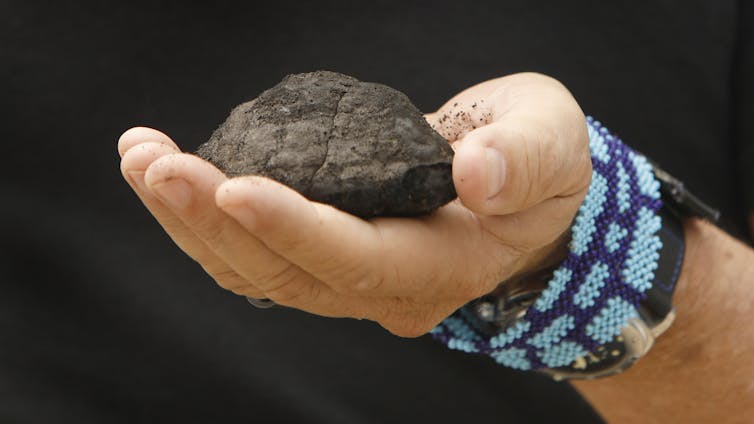
Nodules, which appear like potato-sized rocks, are found scattered across seabed plains four to six kilometres beneath the surface. These nodules are rich in nickel, cobalt, copper and manganese – metals used in electric vehicle batteries, smartphones and wind turbines.
Mining them involves driving a robotic “vacuum” over the seabed, pumping nodules up a riser pipe to a ship, and shipping concentrates ashore for processing.
Nodules aren’t the only target. Companies also eye sulfide deposits at hydrothermal vents and cobalt-rich crusts on underwater mountains.
Increasingly, seabed minerals have become geopolitically important – and for two key reasons.
First, the energy transition is driving up demand for nickel, cobalt and manganese, with agencies projecting at least a doubling over the next two decades. Second, supply chains are concentrated in a handful of countries, making democracies nervous about choke points.
Policymakers and firms therefore see seabed minerals as a hedge: a way to diversify sources of “critical minerals” for clean energy and military defence.
Polymetallic nodules on the deep seabed, like this one, contain nickel, cobalt, copper and manganese - metals targeted for batteries and electronics.Carolyn Cole/Getty Images
At the same time, climate-driven shifts are drawing key tuna species – bigeye, skipjack and yellowfin – into the CCZ. Models suggest biomass increases of 10% to 30% for these species under warming scenarios. The result? Tuna fisheries and mining operations are set to share the same patch of ocean.
Mining plumes – clouds of sediment and metals stirred up at the seabed and discharged at the surface – could spread tens to hundreds of kilometres horizontally and hundreds of metres vertically.
For tuna and their plankton prey, the risks include stress on gills, disrupted feeding cues, and exposure to contaminants. Mid-water food webs could be hit hard: studies suggest over half of zooplankton and micronekton could be affected, rippling up to tuna stocks.
For Pacific economies reliant on tuna, this overlap represents a looming collision of industries. These tensions are already playing out in parts of the Pacific, including on New Zealand’s doorstep.
This underscores how great-power competition is now converging on Pacific seabed resources.
In the same year, the US Department of the Interior began exploring deep-sea mineral leasing in federal waters near American Samoa. Local leaders flagged risks to tuna fisheries and culture, urging extended consultations.
The process remains exploratory, but it shows how seabed plans can collide with livelihoods even before a single robot touches the seafloor.
There are still plenty of unknowns about the environmental impacts.But we know mining removes life-bearing sediment and nodules and that sediment plumes can travel kilometres beyond the site. Decades-old disturbance tracks still show reduced biodiversity.
A 2024 study warned that plumes could mobilise metals into mid-water habitats, threatening marine life we barely understand. Recovery could take centuries – if it happens at all.
Why Pacific-led governance matters
The ISA has approved exploration but not exploitation; negotiations keep stalling amid calls, led by Pacific nations, for a moratorium or precautionary pause until science catches up.
Meanwhile, Pacific states are ratifying the High Seas Treaty, which will enable marine protected areas and require environmental impact assessments – tools to safeguard biodiversity and equity.
Sovereignty here isn’t abstract. In the Cook Islands, it means deciding if and when mining happens after community debate and science. In American Samoa, it means ensuring federal processes don’t undermine tuna-based livelihoods.
In a regional sense, it means Pacific voices shaping global decisions, rather than having rules imposed from afar.
Ultimately, the stakes are simple: risk a barely understood ecosystem to supply battery metals and military defence applications, or build the transition around circular materials, stronger land-based standards and robust ocean protections.
Pacific-led governance – grounded in science, culture and consent – is the best chance the world has to make sure decisions about the deep sea benefit people and nature, not just the next commodity cycle.
Viliame Kasanawaqa does not work for, consult, own shares in or receive funding from any company or organisation that would benefit from this article, and has disclosed no relevant affiliations beyond their academic appointment.
This article is republished from The Conversation under a Creative Commons license.